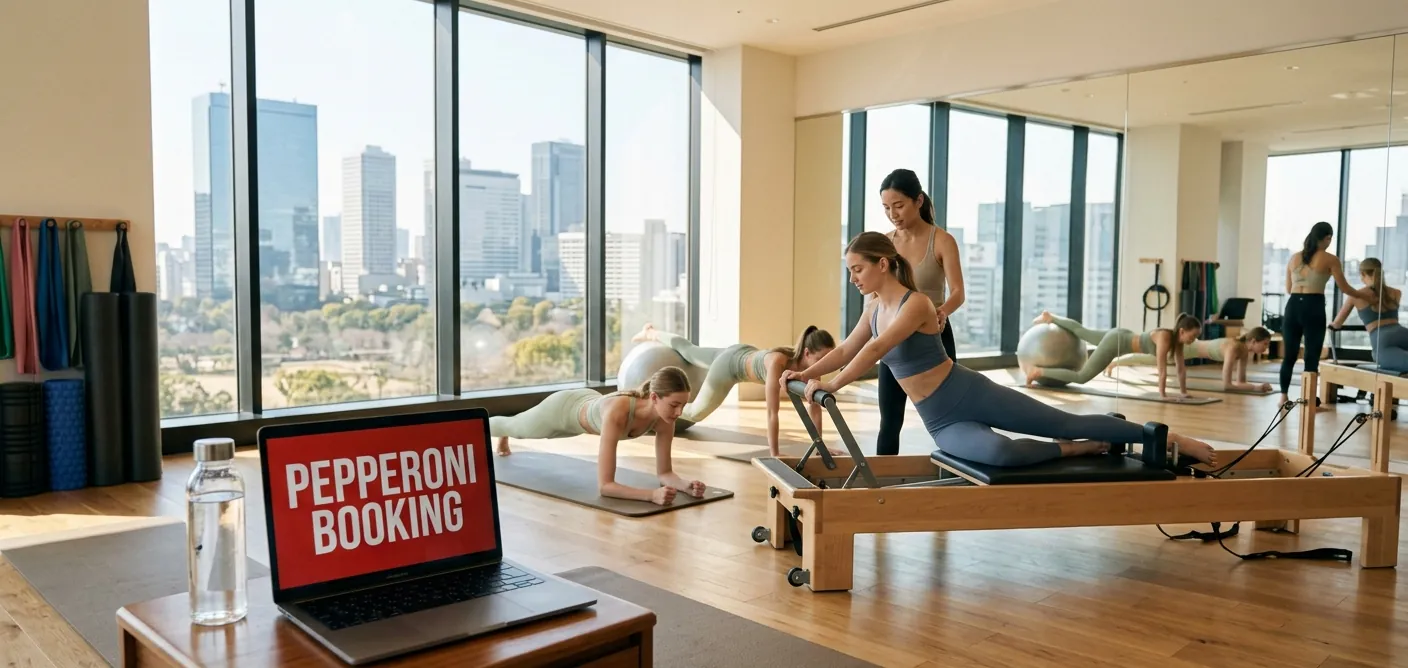
Personalized onboarding increases client retention by creating tailored experiences from day one
Automated scheduling and reminders reduce no-shows and keep clients engaged between sessions
Data-driven recommendations guide clients toward appropriate programs, enhancing their progress
Seamless payment experiences remove friction and improve client satisfaction
Community-building features transform studios into vibrant hubs where clients feel connected
The Retention Crisis in Gyrotonic® Studios
Client retention is the lifeblood of any Gyrotonic® studio. Yet many studio owners struggle to keep clients engaged beyond their initial sessions.
The fitness industry faces a 50% average annual client churn rate. Gyrotonic® studios, with their specialized equipment and methodology, face even higher retention challenges. Clients often try a few sessions but fail to commit long-term.
Technology can bridge this gap. Client-centric tools transform sporadic visitors into loyal community members. The right software doesn’t just manage bookings—it creates personalized experiences that keep clients returning.
Why Traditional Retention Strategies Fail
Most studios rely on generic retention tactics:
Discounts and promotions
Generic email newsletters
One-size-fits-all class schedules
Manual follow-ups
These approaches lack personalization. Clients want to feel seen, understood, and valued. Technology enables studios to deliver precisely that.
Personalization drives retention. Clients who feel their individual needs are met are 3x more likely to remain loyal.
Strategy 1: Personalized Client Journeys Through Smart Onboarding
The first interaction sets the tone for long-term engagement.
Smart onboarding captures client goals, preferences, and health considerations during registration. This data integrates into their profile for instructor review. Instructors can then tailor recommendations from day one.
What to Capture During Onboarding
Fitness goals and timeline
Health considerations or injuries
Preferred class times
Previous Gyrotonic® experience
Communication preferences
Larry’s School of Ballet implemented this approach during beta testing. Their instructors now greet new clients with specific program recommendations based on their onboarding data.
How Technology Enables Personalization Modern booking management systems store client profiles with:
Session history
Instructor notes
Progress tracking
Automated reminders
This creates a seamless experience where every interaction feels tailored. Clients appreciate when studios remember their preferences and progress.
Strategy 2: Automated Engagement with Smart Scheduling
Consistent communication is key to retention. Yet manual follow-ups are time-consuming and inconsistent.
Automated scheduling systems maintain engagement without adding administrative burden. They handle reminders, confirmations, and follow-ups automatically.
The Power of Automated Reminders
Reduce no-shows by 30%
Keep clients engaged between sessions
Provide consistent touchpoints
Free up staff time for high-value interactions
Email notifications serve multiple purposes:
1Pre-session reminders: Confirm bookings 24 hours in advance
2Post-session follow-ups: Thank clients and suggest next steps
3Progress updates: Share milestones and achievements
4Re-engagement campaigns: Reach out to inactive clients
Avoid over-communication. Space reminders appropriately to prevent client fatigue.
Waitlist Management for Full Classes Popular classes often fill quickly. Waitlist functionality ensures clients don’t miss out—and studios don’t lose revenue.
When a spot opens, the system automatically:
Notifies the next client on the waitlist
Offers a limited-time booking window
Confirms the new booking
Updates the class capacity
This creates urgency and opportunity. Clients appreciate the proactive communication, and studios maximize class attendance.
Strategy 3: Data-Driven Program Recommendations
Clients stay engaged when they see progress. Yet many struggle to choose the right classes for their goals.
Data-driven recommendations guide clients toward appropriate programs. The system analyzes their history, preferences, and progress to suggest next steps.
How Recommendations Work
1Track client attendance: Monitor frequency and class types
2Analyze progress: Note improvements and milestones
3Identify patterns: Recognize preferences and trends
4Suggest next steps: Recommend appropriate classes or workshops
For example, a client who regularly attends Gyrotonic® Level 1 might receive a recommendation for Level 2. Someone recovering from an injury could be guided toward therapeutic sessions.
The Role of Instructor Insights Technology enhances—not replaces—instructor expertise. Instructors can add notes to client profiles, which the system uses to refine recommendations.
This collaboration creates a powerful feedback loop:
Instructors provide qualitative insights
The system analyzes quantitative data
Clients receive personalized suggestions
Strategy 4: Seamless Payment Experiences
Payment friction is a silent retention killer. Clients expect smooth, flexible payment options.
Integrated payment processing systems handle transactions seamlessly. They support multiple payment methods and automate billing for memberships and class packs.
The Impact of Payment Flexibility
Reduces barriers to booking
Accommodates client preferences
Minimizes administrative work
Improves cash flow
Key features to look for:
Multiple payment methods: Credit cards, digital wallets, bank transfers
Automated billing: Recurring payments for memberships
Class pack management: Track usage and renewals
Secure transactions: PCI-compliant processing
Automated Payment Reminders Late payments disrupt cash flow and client relationships. Automated reminders handle this delicately:
Send friendly notifications before payments are due
Follow up on failed transactions
Offer easy payment options
Maintain professionalism
This reduces awkward conversations and keeps clients engaged. They appreciate the convenience, and studios benefit from consistent revenue.
Strategy 5: Community Building Through Shared Experiences
Clients stay loyal to communities, not just classes. Technology can foster connection beyond the studio walls.
Shared experiences create a sense of belonging. Clients who feel part of a community are more likely to remain engaged long-term.
How Technology Enhances Community
Client profiles: Allow clients to share their goals and progress
Social features: Enable interaction between clients (with privacy controls)
Event management: Organize workshops and social gatherings
Progress sharing: Celebrate milestones with the community
Larry’s School of Ballet used these features to create a vibrant community. Clients now interact online, share their progress, and attend events together.
The Power of Shared Goals Community features work best when centered around shared goals:
Group challenges: Encourage friendly competition
Progress tracking: Show collective achievements
Social events: Foster in-person connections
Support networks: Create peer accountability
These elements transform a studio from a service provider into a community hub. Clients develop friendships and support systems that keep them engaged.
Implementing Client-Centric Tech in Your Studio
Adopting new technology can feel overwhelming. Yet the right approach makes implementation smooth and effective.
Start with a clear plan:
1Assess your needs: Identify pain points and goals
2Choose the right tools: Select software that aligns with your vision
3Train your team: Ensure staff are comfortable with the new system
4Communicate with clients: Explain the benefits and changes
5Monitor and adjust: Track results and refine your approach
Choosing the Right Software Not all software is created equal. Look for solutions designed specifically for Gyrotonic® studios.
Key features to prioritize:
Client management: Store profiles, notes, and history
Automated communication: Send reminders and follow-ups
Data insights: Track progress and engagement
Pepperoni Booking, currently in beta testing, offers these features tailored for movement studios. Its mobile-optimized interface ensures clients can book and engage from any device.
Training Your Team Successful implementation requires staff buy-in. Provide comprehensive training and ongoing support.
Effective training includes:
Hands-on workshops: Let staff practice using the system
Role-specific guides: Tailor training to different roles (instructors, front desk, managers)
Ongoing support: Offer resources for troubleshooting and questions
Feedback loops: Encourage staff to share their experiences and suggestions
Communicating with Clients Clients appreciate transparency. Explain the changes and highlight the benefits.
Key messages to communicate:
Convenience: Easier booking and payment options
Personalization: Tailored recommendations and experiences
Community: New ways to connect with other clients
Support: Improved communication and engagement
Use multiple channels to reach clients:
Email announcements
In-studio signage
Social media updates
Personal conversations
The Future of Client Retention in Gyrotonic® Studios
The fitness industry continues to evolve. Studios that embrace client-centric technology will lead the way in retention and growth.
Emerging trends to watch:
AI-driven personalization: More sophisticated recommendations and insights
Wearable integration: Real-time progress tracking and feedback
Virtual communities: Enhanced online interaction and support
Predictive analytics: Anticipate client needs and preferences
Yet technology alone isn’t the answer. The most successful studios combine smart tools with genuine human connection. Instructors remain the heart of the client experience.
Balancing Tech and Touch The best retention strategies blend technology with personal interaction:
Use tech for efficiency: Automate administrative tasks
Focus on relationships: Let instructors build personal connections
Enhance, don’t replace: Use technology to support—not replace—human interaction
This balance creates a seamless client experience. Technology handles the logistics, freeing instructors to focus on what they do best: guiding clients toward their goals.
Measuring Success Track key metrics to evaluate your retention efforts:
Client lifetime value: Average revenue per client over time
Retention rate: Percentage of clients who remain active
Attendance frequency: How often clients book sessions
Net promoter score: Client satisfaction and loyalty
Regularly review these metrics and adjust your strategies as needed. Retention is an ongoing process, not a one-time fix.
Regularly review your retention metrics. Small improvements can lead to significant revenue growth over time.
Join the Movement Toward Smarter Studio Management
Client retention is the foundation of a thriving Gyrotonic® studio. The right technology transforms sporadic clients into loyal community members.
Pepperoni Booking is currently in beta testing, offering a client-centric platform designed specifically for movement studios. Its features streamline operations, enhance engagement, and build community—all while keeping the focus on what matters most: your clients.
Ready to transform your studio’s retention strategy? Join our beta community and experience the future of client-centric studio management. Contact us to learn more about early access and collaborative development opportunities.
Together, we can create studios where clients feel valued, engaged, and excited to return.
저자 소개
Daishin Murooka
Founder
자주 묻는 질문
이 주제에 대한 일반적인 질문입니다
Technology enhances retention by personalizing client experiences, automating engagement, and building community. Smart onboarding captures client goals and preferences, while automated reminders and recommendations keep them engaged. Data-driven insights help instructors tailor programs, and seamless payment systems remove friction. Community features foster connection, transforming clients into loyal community members. The right software creates a cohesive experience that makes clients feel valued and understood, increasing their likelihood of staying long-term.
Look for software designed specifically for movement studios like Gyrotonic®. Key features include client management with profiles and notes, class scheduling with capacity and waitlist management, automated email notifications, and integrated payment processing. Personalization tools, such as data-driven recommendations and progress tracking, are essential for retention. Community-building features, like event management and social interaction tools, help foster loyalty. Ensure the software is mobile-optimized for client convenience and offers multi-language support if needed.
Automated reminders play a crucial role in retention by maintaining consistent communication without adding administrative burden. They reduce no-shows by confirming bookings 24 hours in advance, keeping clients engaged between sessions. Post-session follow-ups thank clients and suggest next steps, while progress updates share milestones and achievements. Re-engagement campaigns reach inactive clients, bringing them back into the studio. These touchpoints create a seamless experience, making clients feel supported and valued, which increases their likelihood of remaining loyal.
Start with a clear plan that includes assessing your needs, choosing the right tools, and training your team. Communicate the changes to clients, highlighting the benefits such as convenience, personalization, and community. Begin with one or two key features, like automated scheduling or client management, and expand as your team becomes comfortable. Provide hands-on training and ongoing support to ensure staff buy-in. Monitor results and adjust your approach based on feedback and metrics. Successful implementation requires collaboration between your team, clients, and the software provider.
Track key metrics to evaluate your retention efforts. Client lifetime value measures the average revenue per client over time, while retention rate shows the percentage of clients who remain active. Attendance frequency indicates how often clients book sessions, and net promoter score reflects client satisfaction and loyalty. Regularly review these metrics to identify trends and areas for improvement. Small increases in retention can lead to significant revenue growth over time. Use data insights to refine your strategies and create a more engaging client experience.