November 16, 2026
11 min read
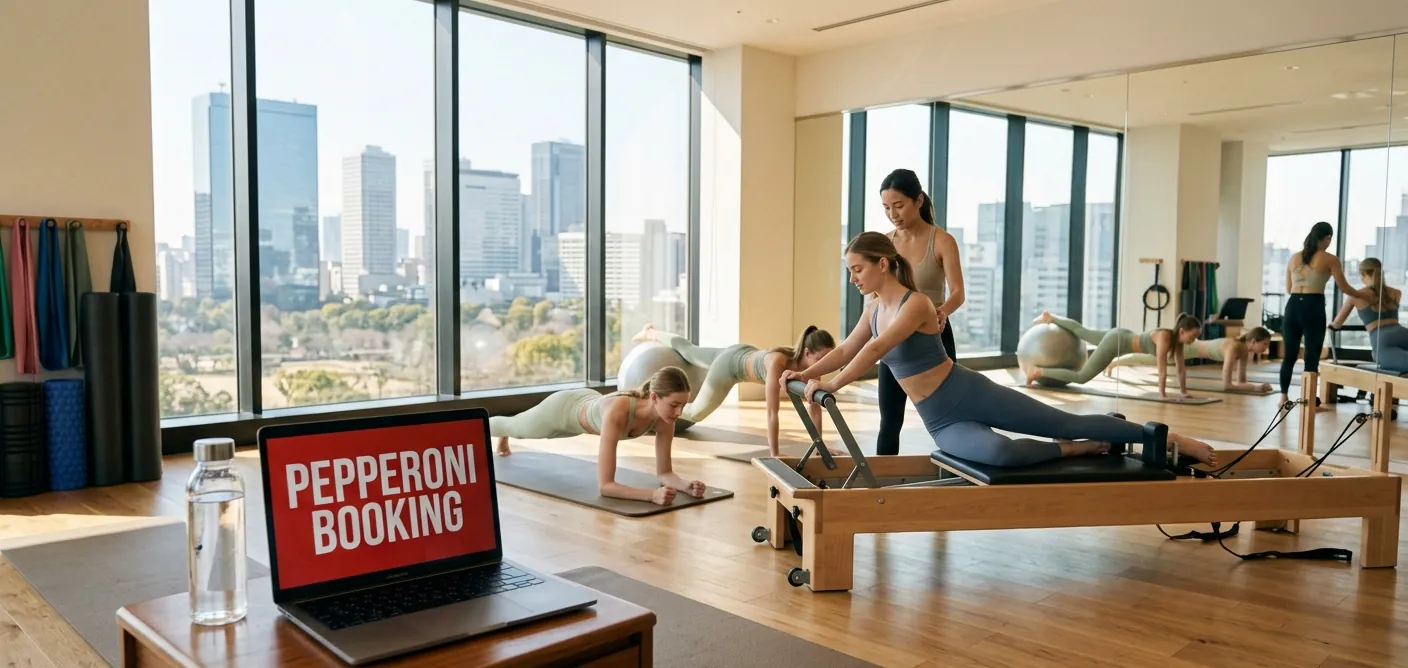
When a boutique studio markets a seat in a 50-minute session as a drop-in product, clients evaluate that service purely on a transactional, price-per-minute basis. This commoditization places high-end movement studios in direct price competition with high-volume fitness franchises, forcing owners into a margin-squeezing race to the bottom.
Selling single classes or unbundled class packs encourages inconsistent attendance. When clients view attendance as an optional line-item expense rather than an essential health investment, their attendance fluctuates wildly based on daily schedules, personal energy, and weather. This unpredictability destabilizes recurring revenue and makes financial forecasting nearly impossible for studio owners.
Studios that rely on volume-based class packs frequently suffer from elevated client churn rates. Clients who purchase a ten-class pass often take several months to exhaust their visits, diluting the physical benefits of regular practice and diminishing their perceived value of the studio's instruction.
To build a sustainable business model in 2026, studio owners must fundamentally reframe their offer positioning. Shifting from transactional class sales to outcome-based programs elevates your perceived value, anchors your pricing to real client transformation, and establishes long-term recurring revenue.
Selling drop-in sessions and unbundled passes introduces several critical structural vulnerabilities into your business model:
Transcending the drop-in mindset requires educating your market on why sporadic movement yields minimal physical return, while structured commitment creates transformative physical changes.
Before: "Buy a 10-Class Reformer Pass for []"
After: "Join the 12-Week Spinal Decompression & Core Stability Program"
By positioning your studio around measurable physical changes rather than room capacity, you shift the purchase decision from a discretionary workout expense to a vital personal health outcome.
Outcome-based positioning is a strategic commercial model where a studio packages and markets its instruction around explicit physical transformations, health goals, or functional capabilities rather than access to equipment or individual time slots. This approach aligns the client's financial investment directly with their desired personal results.
When a prospective client enters your studio, they rarely care about the mechanical specifications of your reformers or the exact minute duration of your sessions. They are seeking relief from chronic lower back pain, improved performance in their weekend recreational sports, graceful aging, or assistance recovering from an injury.
Transitioning to outcome-based sales means auditing every touchpoint of your communication strategy to speak directly to these underlying motivations. Instead of organizing your public timetable exclusively by difficulty tiers like "Level 1 Reformer" or "Advanced Mat," consider structuring client journeys around functional goals.
A client seeking post-rehab stability needs a clear pathway, not a generic schedule grid. When your studio offers structured pathways, prospective clients immediately recognize that your instructors understand their specific physical struggles.
Outcome-oriented packaging requires establishing clear physical benchmarks during the initial intake phase. By introducing comprehensive initial assessments, instructors can document baseline measurements, movement restrictions, and pain indicators to chart a clear course for the client's journey.
Developing a specialized curriculum for distinct client populations allows you to dominate specific market niches. Whether working with postpartum recovery, active older adults, or high-performance athletes, outcome-based packages communicate hyper-targeted value that commands premium pricing.
Every successful outcome-based movement package rests upon four structural pillars:
When these four pillars are present, your service moves out of the discretionary exercise category and becomes an essential component of your client's long-term wellness strategy.
Studio owners can reframe class descriptions by auditing their current copy for feature-heavy terms like "50 minutes," "balanced body reformers," or "sweat session," and replacing them with benefit-driven messaging centered on posture correction, pain elimination, and functional strength gains. Every class title and description should clearly state who the program is for and the exact physical result it delivers.
Marketing features tells prospects what happens inside your room; marketing outcomes tells prospects how their lives will change outside your room. This distinction is the single most critical factor in driving premium conversions.
Examine the language currently used on your booking page, social media platforms, and printed collateral. If your text reads like a technical breakdown of studio equipment, you are selling features. You must translate technical movement jargon into relatable physical benefits.
For example, instead of describing a session as "incorporating spring tension work to target the posterior chain," state clearly that the program "strengthens your upper back muscles to eliminate office-desk slouching and daily neck strain."
Feature-Driven: "Our Gyrotonic® classes utilize the Pulley Tower Combination Unit to increase joint articulation through circular motion patterns."
Outcome-Driven: "Our specialized Gyrotonic® spinal mobility series opens tight shoulders and restores fluid, pain-free rotation for active golfers and runners."
Consider how historic institutions position their offerings. For instance, Larry's School of Ballet does not merely sell access to studio floor space or hourly dance exercises; they sell artistic precision, physical discipline, and refined posture. Specialized movement studios must adopt a similar mindset.:::tip
Audit your website's primary navigation today. If your main menu links to "Classes," "Prices," and "Schedule," experiment with renaming those entry points to "Transformation Programs," "Results," and "Start Your Journey." Test how this subtle language shift alters conversion rates on your landing pages.:::
To effectively execute this positioning strategy across all digital channels, modern studios rely on specialized tools. Utilizing targeted digital marketing strategies for pilates and gyrotonic studios allows studio owners to automate lead capture and deliver outcome-focused landing pages to prospective clients.
When writing promotional content for your studio, follow this simple transformation model to convert feature descriptions into high-converting outcome statements:
By executing this messaging framework across every marketing channel, your studio establishes immediate authority and differentiates itself from generic local competitors.
Membership models that support long-term client outcomes utilize recurring committed tiers, structured onboarding packages, and semi-private hybrid programs rather than open-ended, non-committal drop-in cards. These models pair regular instructional touchpoints with mandatory progressive evaluations to guarantee continuous physical advancement.
Transitioning your revenue strategy away from single visits requires restructuring your service offerings into outcome-centric tiers. Rather than offering endless choices that cause decision fatigue, curate three clear outcome pathways tailored to client commitment levels.
An ideal introductory structure begins with an intensive onboarding phase. A client seeking long-term movement success should start with a dedicated private diagnostic session, followed by a multi-week foundational program. This ensures proper alignment, body awareness, and safety before transitioning into high-density schedules.
Many studio owners hesitate to remove flexible class passes, fearing they will alienate price-sensitive visitors. However, experience proves that clients who purchase commodity class packs have high churn rates and lower overall satisfaction. Transitioning to committed outcome models increases client lifetime value while improving physical results.
For studios seeking high-margin structures, incorporating semi-private offerings provides an ideal middle ground between group economics and private-level outcomes. To understand the financial mechanics of this model, explore the business case for semi-private sessions.
When designing high-value transformation packages, review your pricing strategies to ensure your published rates reflect the value of the outcome delivered. For detailed guidance on building high-margin pricing frameworks, consult our comprehensive guide on how to price Pilates packages for maximum profit in 2026.
To build a highly retention-focused client onboarding pipeline, incorporate these five strategic touchpoints:
Legacy Model: Drop-In Pass -> Random Class Selection -> Inconsistent Attendance -> Churn
Outcome Model: Movement Audit -> Custom Roadmap -> Progressive Sessions -> Milestone Review -> Renewal
This structured approach shifts the perception of your studio from an optional leisure activity to an indispensable partner in long-term physical health.
Delivering hyper-personalized, outcome-driven journeys at scale requires robust backend infrastructure. When studio management relies on fragmented systems, administrative overhead increases and client progress tracking falls through the cracks.
Using modern Pilates management software streamlines the operational complexity of managing outcome-based programs. From spot-based reformer reservations to automated client intake note collection, modern software empowers your administrative team and instructors to deliver an exceptional client experience.
Centralized client profiles allow instructors to record detailed assessment notes, track injury histories, and note movement modifications in real time. When an instructor opens their daily class roster on a mobile-optimized interface, they can instantly review the specific goals and physical limitations of every attending client.
Automated communication workflows further strengthen outcome retention. Rather than sending generic promotional blasts, modern management platforms allow studios to trigger targeted email notifications based on client attendance milestones, booking habits, and contract renewals.:::note
Automating administrative touchpoints allows your instructional staff to focus entirely on teaching and client retention. Automation ensures client check-ins, waitlist updates, and progress check-in reminders occur seamlessly behind the scenes.:::
Implementing automated notification sequences keeps clients engaged throughout their transformation journey. Consider integrating these crucial automated sequences into your operational workflow:
To discover how modern tech stacks reduce client drop-off and streamline daily operations, read our strategic guide on studio client retention.
Leveraging cloud infrastructure to automate scheduling, payment processing, and client management creates a smooth operational environment. This allows your team to focus on delivering high-impact movement outcomes.
Shifted positioning strategies must be evaluated against clear business metrics. Transitioning away from low-cost drop-in models directly impacts your key performance indicators, generating higher retention, increased lifetime value, and improved studio utilization rates.
When tracking the financial health of an outcome-based studio, standard metrics like total head-count become secondary to recurring revenue stability and client retention longevity. Tracking how long clients remain active in their transformation roadmaps gives you a true measurement of studio sustainability.
Studios that adopt outcome-based pricing typically experience a significant decline in monthly client churn. When clients commit to multi-month transformation packages, they develop consistent habits, leading to improved physical results and deeper loyalty to your studio brand.
Furthermore, outcome-driven positioning enhances instructor job satisfaction. Instructors who work with committed clients over extended periods witness genuine physical progress, reducing teacher burnout and employee turnover across your studio staff.
To accurately evaluate your studio's operational transition, track these five fundamental performance metrics:
Analyzing these key operational metrics month-over-month provides clear proof of the financial power of outcome-based marketing. Transitioning away from commodity class packs protects your studio's profitability, elevates your brand reputation, and establishes your business as a premier leader in functional movement instruction.
Stop manually answering booking questions — let clients book themselves.
21-day free trial · No credit card required
For Pilates Studios
Founder, Studio Owner & Engineer
Common questions about this topic
Have more questions? Contact our team
A few short welcome emails, then roughly one email a month on bookings, keeping clients and running a calmer studio. Occasional product news.
We're working directly with the first 100 Founding Studios — boutique studios shaping what we ship next. If that fits your studio, the trial is open.
Smart scheduling tools that showcase your availability and fill empty spots
Professional online booking that converts visitors into loyal clients
Automated reminders that meaningfully reduce no-shows
No credit card required • 21-day free trial
A few short welcome emails, then roughly one practical email a month on reducing booking chaos and keeping clients. Occasional product news.